
SYNTHIA is inviting citizens across Europe to take part in an important new survey exploring public perspectives on synthetic data in healthcare. As synthetic data becomes an increasingly relevant tool in medical research and innovation, understanding how people perceive its use is essential.
About the survey
SYNTHIA is developing safer, and trustworthy ways to create and use synthetic data in healthcare. To do this responsibly, we need to understand what patients and citizens think about this technology - your expectations, your concerns, and what would make you feel comfortable with its use. This survey will ensure that synthetic data solutions are developed for people by listening to them. Your input will help us identify where clarity is needed, where concerns exist, and where potential value is seen; to assure meaningful benefits for patients and society.
In short: SYNTHIA is doing this survey because your voice is essential to shaping how synthetic data should and should not be used in healthcare.
- Purpose: To understand the European population’s views, thoughts and concerns on the use of synthetic data in medicine
- Who can participate: General population across Europe
- Time commitment: Approximately 15–20 minutes
- Languages available: English, Spanish, French, German & Dutch
This is a survey directed to all citizens over 18 years old.
Have your say
By participating in this survey, you will contribute directly to shaping how synthetic data is developed and used in healthcare across Europe. Your perspective will help ensure that future solutions are not only innovative, but also aligned with public expectations, values, and trust.
Take part in the survey and make your voice heard. Access the survey here >

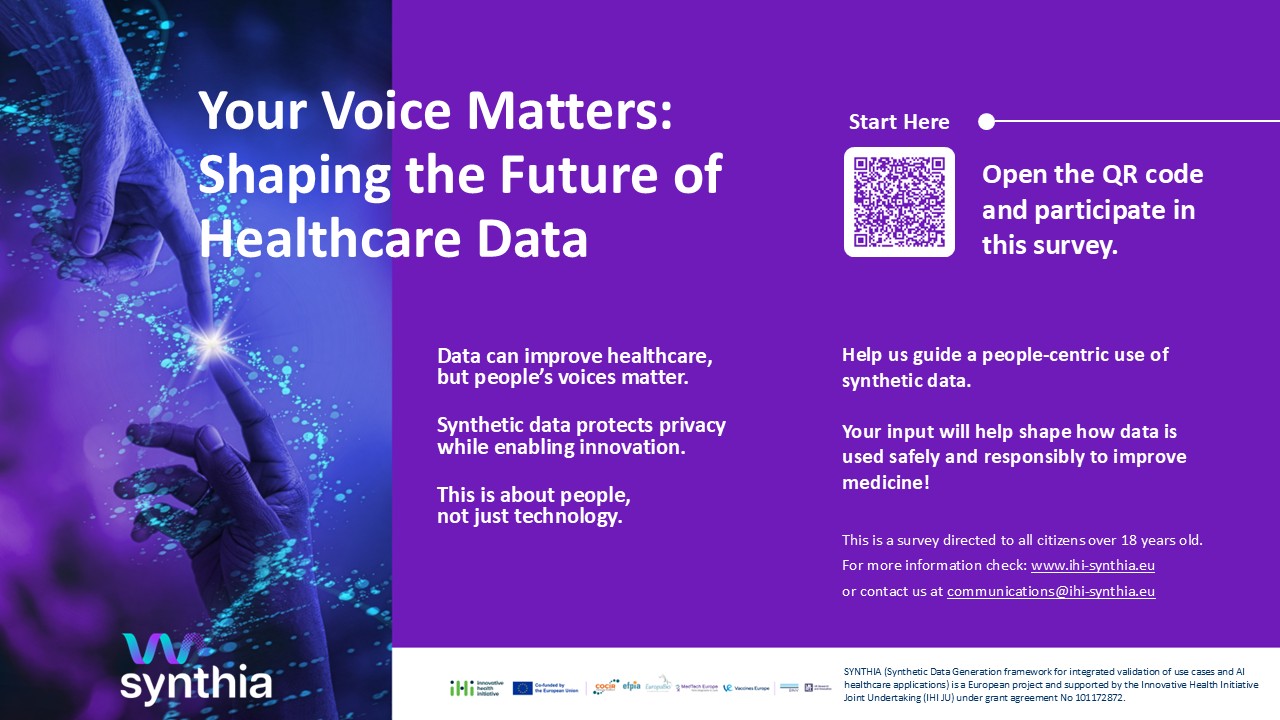
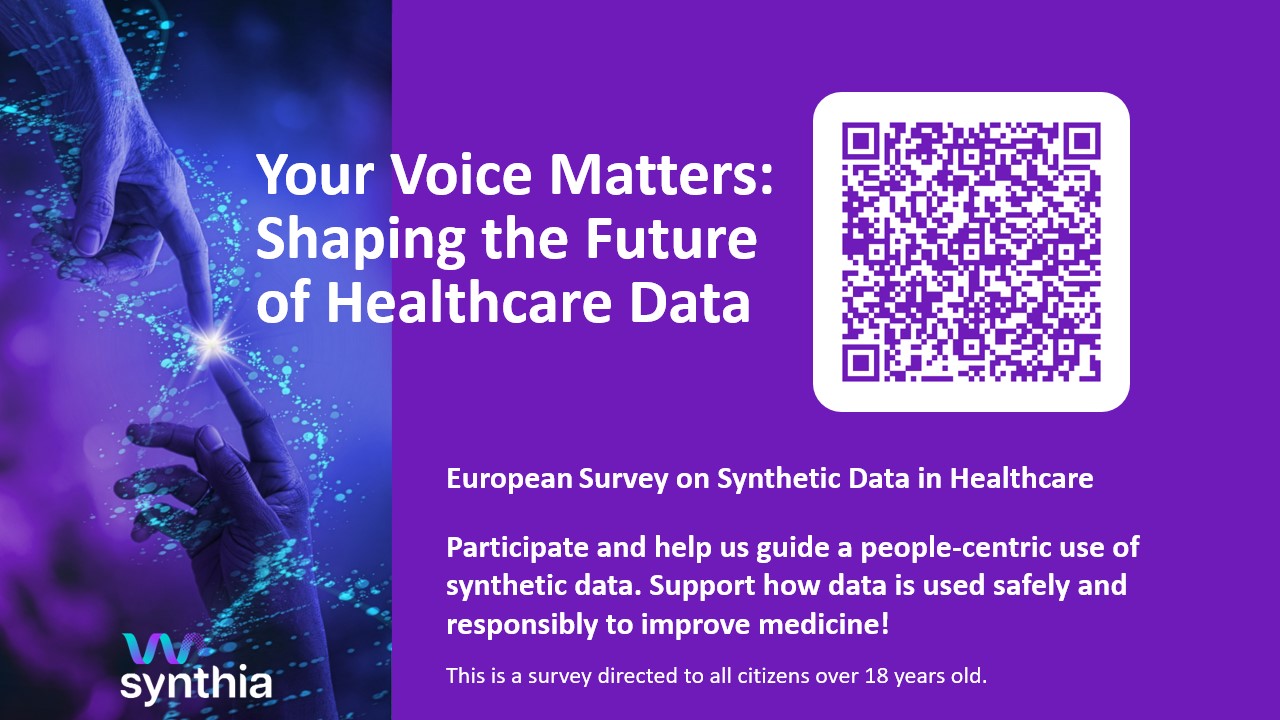
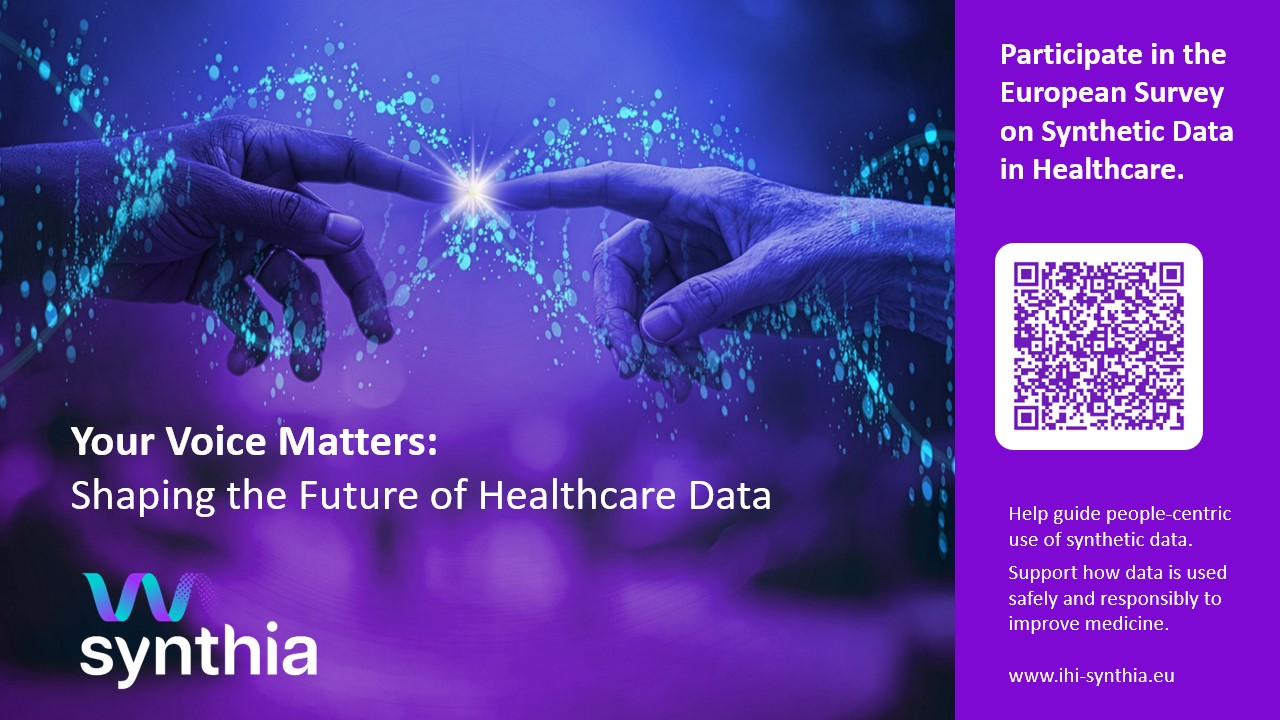
Please share our message, we made a digital flyer for you to use >
What is synthetic data?
Synthetic Data: Your data, without you in it
When doctors and researchers want to improve treatments or train AI tools, they need large amounts of patient data. But using real medical records raises important privacy concerns and challenges. That’s where synthetic data comes in.
Think of it like a film scene. When filmmakers need a large crowd, they don’t always use real people, they often create digital extras. These characters look and behave realistically, based on real human features and movements, but they aren’t real individuals. Synthetic data works in a similar way.
Computers learn patterns from many real patient records, such as age, diagnosis, treatments, clinical results, and treatment response, and use these patterns to generate entirely new, artificial data. This data reflects the same statistical relationships as real data, but it does not belong to any real person and cannot be traced back to individuals.
In other words, it’s a realistic simulation of health data, designed to protect privacy while still supporting research.
Synthetic Data: What does this mean for you?
- Your personal data stays private and protected
- Researchers can still develop better treatments
- AI tools can be trained and tested more safely
- Data can be shared more easily across Europe
- Rare conditions and underrepresented groups can be better studied
At the same time, synthetic data is not perfect. Its quality depends on the real data it learns from, meaning it can reflect existing gaps or biases. It also does not replace the need for real patient data, especially when studying complex or rare conditions.
The key point: synthetic data is not a copy of you, it is a generated version of patterns in data, helping advance healthcare while protecting your privacy.
Discover more about SYNTHIA
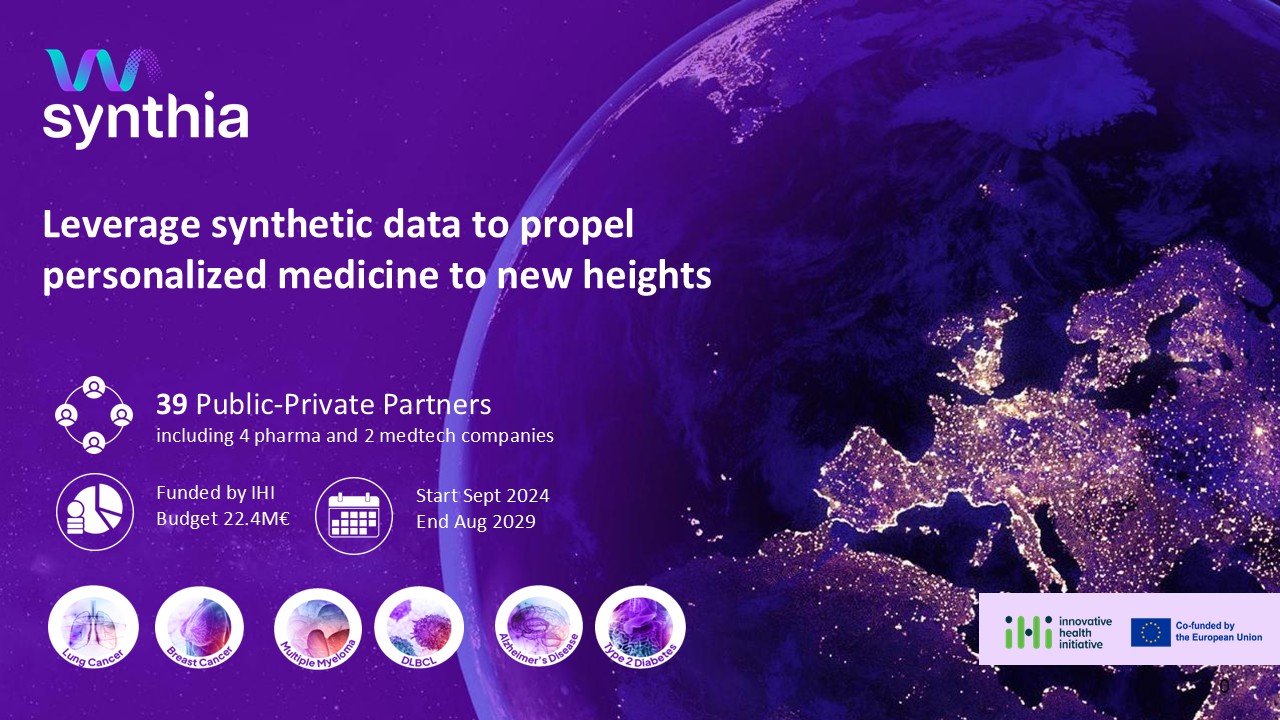
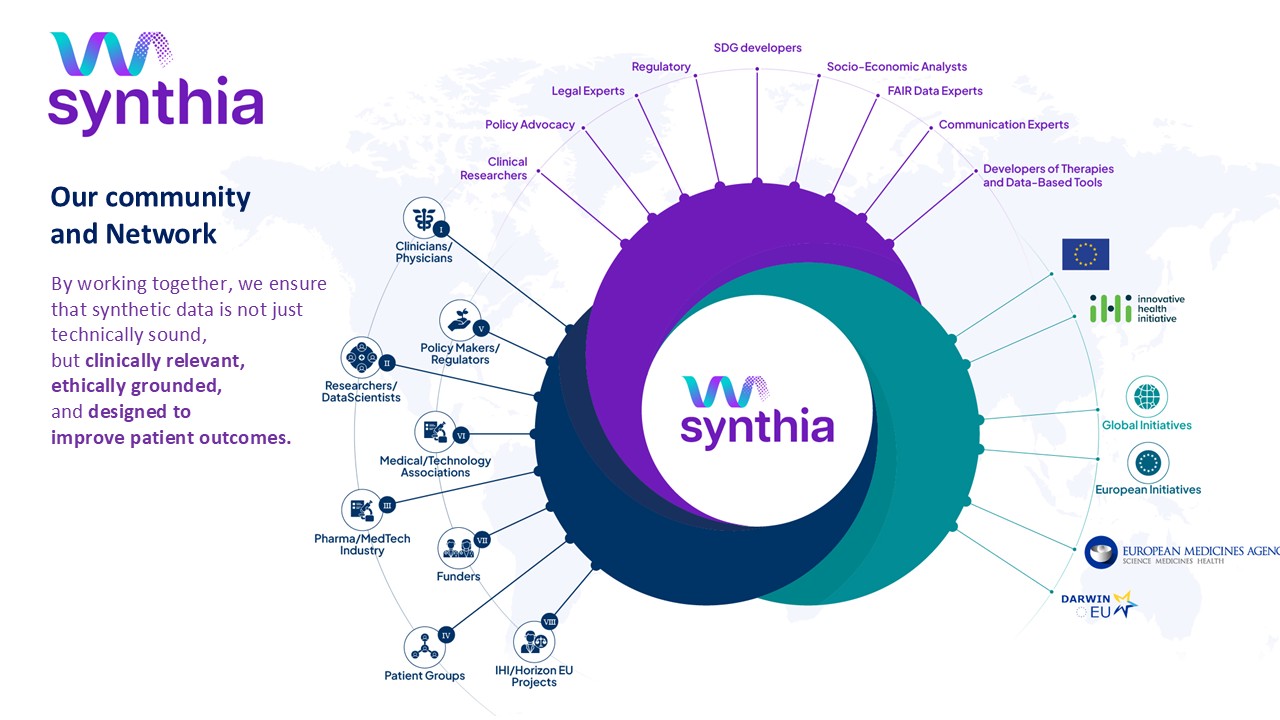
SYNTHIA is working to advance the safe, ethical, and effective use of synthetic data in healthcare. Through close collaboration between researchers, clinicians, industry, and patients, the project explores how synthetic data can support innovation while maintaining trust and protecting privacy. If you would like to learn more about our work, explore:
- Use Cases – Discover how synthetic data is being applied across 6 different disease areas and research challenges. Click here >
- Impact – Learn about the broader goals of SYNTHIA and how it aims to shape the future of healthcare and data use in Europe. Click here >
- Patients – Understand how patient perspectives and involvement are central to SYNTHIA’s approach. Click here >
Help us reach out to European citizens - Make use of our campaign material - Find resources below
All the help is highly appreciated to reach the audience we are aiming for, and we express our gratitude on behalf of the SYNTHIA Consortium. Please find below usefull links, including ready-to-use examples of content and artwork to support the outreach of the SYNTHIA survey on synthetic data in healthcare.