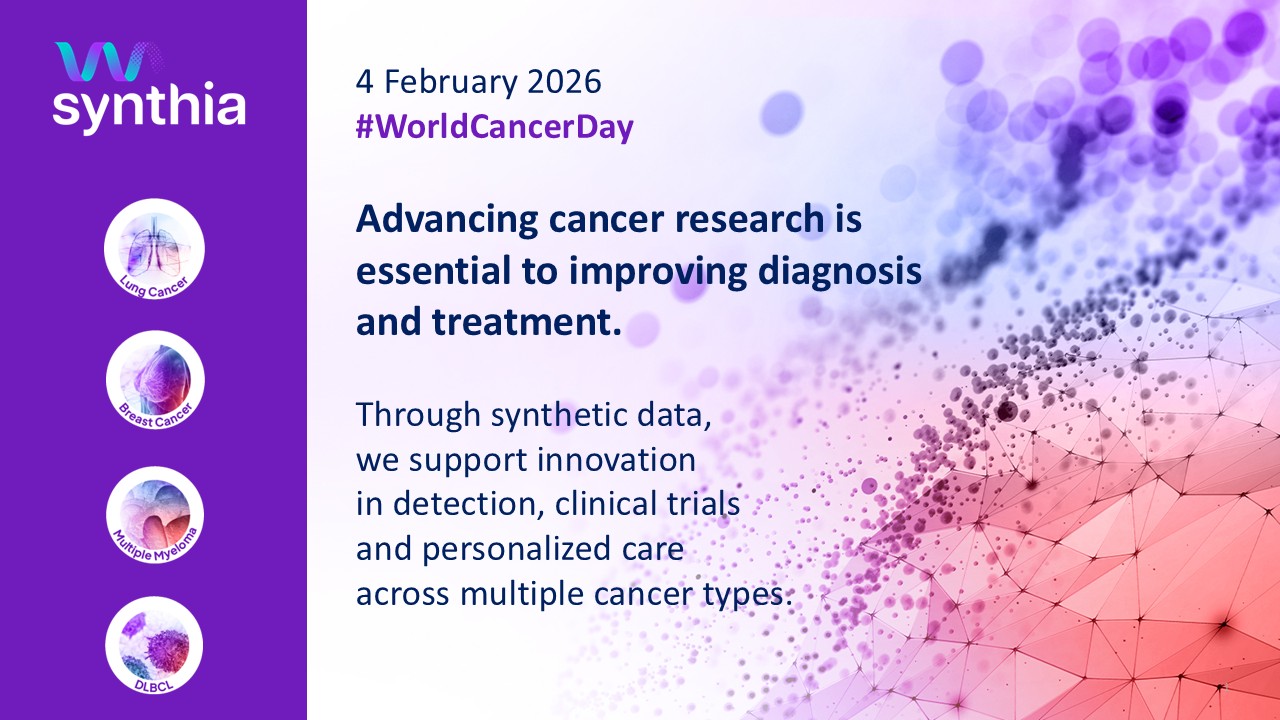

On World Cancer Day, SYNTHIA stands in solidarity with everyone affected by cancer, patients, caregivers, families, researchers and healthcare professionals worldwide.
Cancer remains one of the leading causes of death globally, with millions of new diagnoses each year. Accelerating research, improving early detection and enabling more personalised treatments are critical priorities for the global health community.
At SYNTHIA, we contribute to this effort by developing and validating synthetic data technologies that help unlock innovation while protecting patient privacy.
Unlocking progress where real data is limited
Access to high-quality clinical data is essential for advancing cancer research. However, privacy regulations, data fragmentation and limited availability can slow innovation. The SYNTHIA consortium brings together academic and industry partners to generate high-quality, privacy-preserving synthetic datasets that replicate the complexity of real oncology data. These datasets allow researchers and developers to test, validate and refine AI systems, medical devices and treatment strategies, without exposing identifiable patient information.
By safely simulating real-world clinical scenarios, synthetic data can reduce development timelines and improve the robustness of new tools before they are applied in real healthcare settings.
How synthetic data supports cancer care
SYNTHIA focuses on several oncology use cases across the cancer care domain.
Lung Cancer
Synthetic PET/CT imaging data can help predict treatment response without requiring all patient scans to be shared. This enables collaborative research while preserving privacy.

Breast Cancer
3D synthetic breast anatomy models improve cancer detection research and device optimisation, supporting safer innovation and potentially reducing unnecessary biopsies.

Multiple Myeloma
Synthetic “control arms” in clinical trials can make studies more inclusive for patients with rare profiles and may reduce delays in accessing new treatments.


On World Cancer Day, we reaffirm our commitment to trustworthy and ethical AI. Synthetic data must not only be technically robust, but also responsibly governed, transparent and aligned with patient needs.
By combining technological innovation with strong ethical foundations, SYNTHIA aims to support earlier diagnosis, more precise treatments and improved outcomes for cancer patients worldwide.
Learn more about SYNTHIA’s work in oncology and synthetic data research on our impact and publications page.