
How can European research and innovation move beyond scientific progress to make a meaningful difference in the lives of cancer patients?
At the congress of the European Society For Medical Oncology (ESMO 2026) in Madrid, SYNTHIA joined the conversation on turning advances in personalised oncology into practical solutions for healthcare, while showcasing new research on the potential of AI to make clinical data more accessible and useful.
Bringing European innovation closer to patients
Every breakthrough in cancer research brings new possibilities for more personalised diagnosis, treatment and care. Yet, an important challenge remains: how do we ensure that these innovations reach the patients who need them?
This question was at the heart of discussions at the ESMO 2026 Congress, held from 23 to 27 October in Madrid, Spain, where oncology professionals, researchers, policymakers and healthcare stakeholders gathered to exchange knowledge and explore the future of cancer care. Representing SYNTHIA, Adrián Galiana Bordera from Health Research Institute Hospital La Fe (IIS La Fe) contributed to these discussions through a European policy session focused on translating research into routine clinical practice. Alongside this participation, he presented new research demonstrating how secure, locally deployed AI agents can help transform complex oncology information into structured, interoperable health data. Together, these contributions highlighted two closely connected priorities: making health data more usable for research and innovation, and ensuring that scientific advances ultimately translate into meaningful benefits for patients.
From European projects to real patient pathways
What does innovation really mean for a patient navigating cancer diagnosis, treatment and follow-up?
On 23 October, this question guided the session "Research Has to Reach Claudia: From European Projects to a Working Patient Pathway", organised as part of the personalised oncology policy meeting "Personalised Oncology Across Health Systems – Claudia's Journey: From Diagnosis to Measurable Access".
The session brought together representatives from five European research initiatives, SYNTHIA, iBeChange, BRECISE, SPARC and ON-COME, to explore how scientific developments can move beyond individual research projects and become part of sustainable, accessible patient pathways. Using Claudia's journey as a patient-centred perspective, the discussion focused on the steps needed to bridge the gap between promising innovations and their implementation in everyday healthcare.
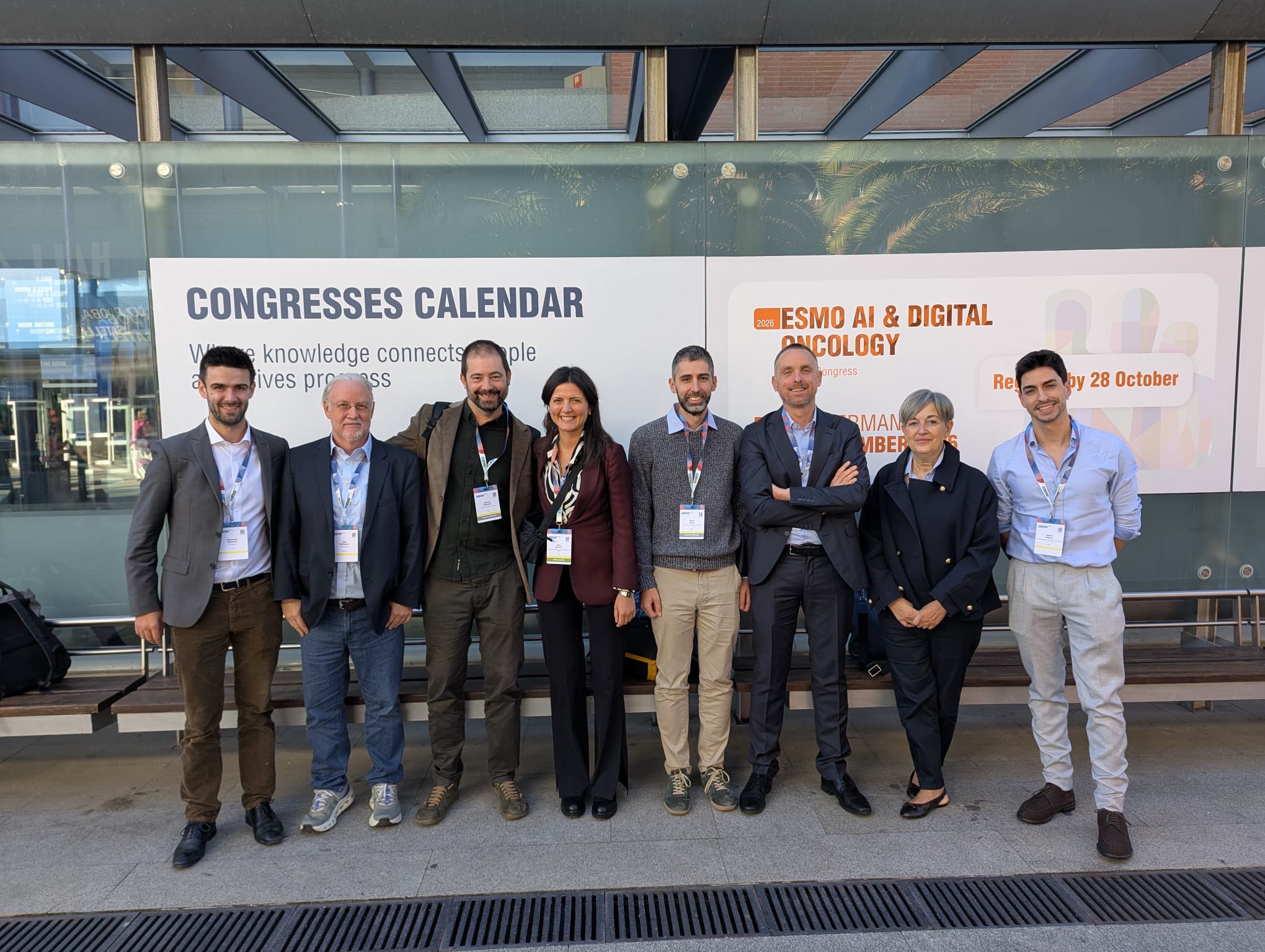
Representing SYNTHIA, Adrián Galiana Bordera shared how synthetic health data could contribute to this transition by supporting the development, evaluation and validation of AI-driven healthcare applications. By generating artificial data that preserve relevant characteristics of real-world datasets, synthetic data offer opportunities to address some of the challenges associated with limited data availability, privacy and fragmentation across healthcare systems. For SYNTHIA, these discussions connect directly to the project's ambition to advance the responsible use of synthetic health data across six disease areas, including lung cancer, breast cancer, multiple myeloma and diffuse large B-cell lymphoma. The session also provided an opportunity to exchange perspectives with complementary European initiatives and reflect on a shared challenge: developing innovative solutions is only one part of the journey; making them useful, trustworthy and accessible in clinical practice is equally important. The session was initiated by SYNTHIA Partner Denis Horgan from EAPM, who also serves as Secretary General of the International Alliance for Personalised Medicine (IAPM), further highlighting the importance of connecting research initiatives with broader European discussions on personalised healthcare implementation.
Turning oncology narratives into usable health data
Beyond the policy discussions, SYNTHIA's participation at ESMO 2026 also brought attention to a practical challenge facing oncology research: how can we unlock valuable clinical information that is often hidden within medical reports and fragmented databases?
Hospitals generate large amounts of clinical information every day. Yet much of this knowledge remains captured in free-text narratives, non-standardised records and databases that are difficult to analyse or combine. This limits opportunities to reuse valuable clinical information for research, develop AI applications and generate evidence that could support better clinical decisions. Addressing this challenge, Adrián presented the poster "From Narrative to Knowledge: Secure Agentic AI for Structuring Oncology Data", featured in the congress category "AI for Clinical Workflows and Decision-Making".
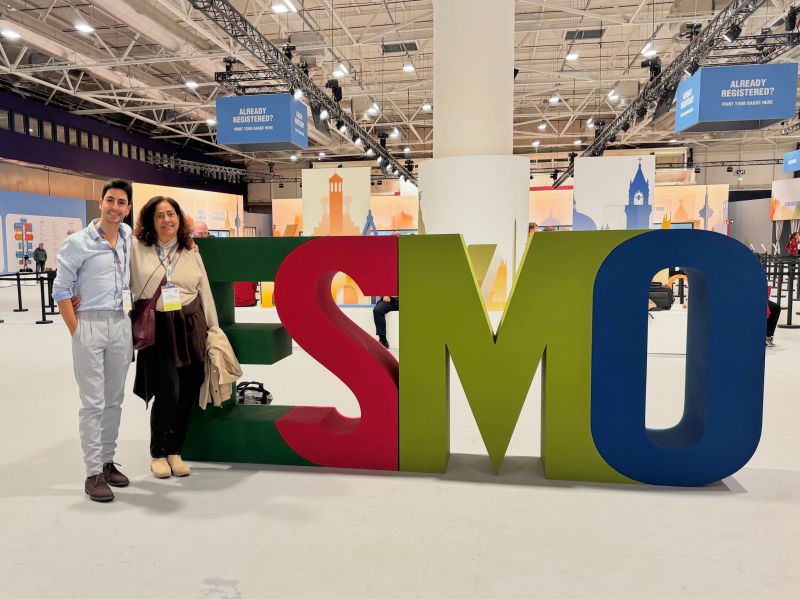
The research, developed by Adrián Galiana Bordera, Gloria Ribas, Leonor Cerdá-Alberich and Luis Martí-Bonmatí from the Biomedical Imaging Research Group at IIS La Fe, brought together work from the SYNTHIA and DETECT projects. The poster showcased an approach using locally deployed AI agents to transform unstructured clinical narratives and non-standardised databases into structured information aligned with the OMOP Common Data Model (OMOP CDM). By combining language models with human oversight and keeping data processing within local environments, the approach aims to support secure, scalable and standardised use of clinical information. This work demonstrates how AI can help bridge the gap between the wealth of information generated in clinical practice and the structured, interoperable datasets needed to advance healthcare research. For SYNTHIA, such developments are particularly relevant. Access to high-quality, harmonised and interoperable health data is an important foundation for generating and evaluating synthetic datasets. Research into secure data structuring and standardisation therefore complements the project's broader efforts to enable responsible, data-driven innovation in healthcare.
Connecting scientific progress with meaningful patient impact
Across the policy discussions and scientific presentations at ESMO 2026, a common message emerged: advancing personalised oncology requires more than technological innovation alone. It also requires collaboration between researchers, clinicians, healthcare institutions, industry, policymakers and patients to ensure that new solutions respond to real clinical needs and can be integrated into healthcare systems. SYNTHIA's participation reflected this connection between research and implementation. While the scientific poster explored how AI can help make complex clinical data more accessible and interoperable, the policy session placed these innovations within the wider context of patient pathways, healthcare access and sustainable implementation. As SYNTHIA continues developing and validating synthetic data generation methods across its clinical use cases, exchanges such as those at ESMO offer valuable opportunities to connect technical developments with the needs and expectations of the wider healthcare community. Ultimately, the value of innovation lies not only in what research makes possible, but in how those possibilities can be translated into better care for patients.