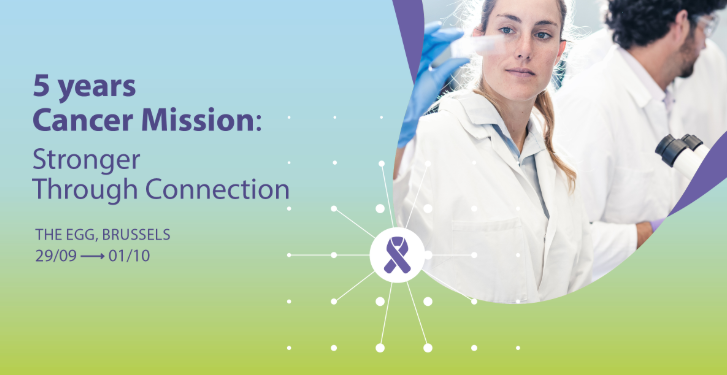

From 29 September to 1 October 2026, SYNTHIA will be represented at “Stronger Through Connection”, the event marking five years of the EU Cancer Mission, taking place in Brussels, Belgium.
The event brings together the European cancer research and innovation community to reflect on five years of progress under the EU Cancer Mission and strengthen connections across research, policy and practice.
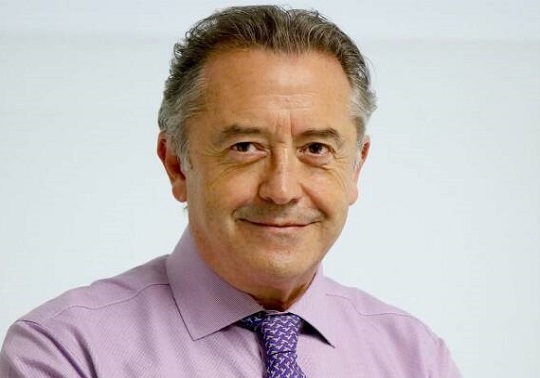
Prof. Luis Martí-Bonmatí, Director of the Clinical Area of the Medical Imaging Department at La Fe Polytechnic and University Hospital, will represent SYNTHIA and speak about the project and its work on synthetic data, cancer research, medical imaging and AI.
He will contribute to two sessions:
- Understanding cancer and importance of data exchange – Part 1: Building a coherent cancer data ecosystem
- Workshop: Cancer imaging data and AI
With four cancer-focused use cases, lung cancer, breast cancer, multiple myeloma and diffuse large B-cell lymphoma (DLBCL), SYNTHIA is investigating how synthetic data can support cancer research across areas including detection, treatment response prediction, outcome prediction and clinical trials.
We look forward to joining the discussions in Brussels and sharing how SYNTHIA is exploring the potential of synthetic data to contribute to the future of cancer research and innovation in Europe.
About the event
Organised by the European Commission, 5 Years EU Cancer Mission: Stronger Through Connection will bring together researchers, clinicians, policymakers, patients, innovators, funders and industry representatives to mark five years of the EU Cancer Mission and look ahead towards achieving its 2030 goal, alongside Europe’s Beating Cancer Plan.
Across three days of discussions, interactive sessions and project showcases, the event will highlight ideas and collaborations shaping cancer research and care across Europe. From prevention and early detection to personalised medicine and quality of life, the programme will explore how stronger connections between research, innovation, policy and people can contribute to better cancer control.